Launch offer — valid today only

📄 Digital book in PDF · read it on your phone or print it

The Septic Installer License Exam in Drawings One Topic on Every Page

Soil texture, setbacks, design flow, tank sizing, trenches, D-boxes, pump tanks and mounds. One drawing per topic, the numbers in a box beside it, so you review the whole system in the same order every time. 64 illustrated pages.

START STUDYING THIS WAY

🔒 Secure checkout · PDF by email · 30-day guarantee

Every topic, its own pageEach step drawn the way it looks on site, with the explanation right beside it
64 illustrated pages9 parts, from the house-to-soil path to inspection day
Up-to-date sourcesTexas 30 TAC 285, NC 15A NCAC 18E, California OWTS Policy and the EPA OWTS Manual
PDF by emailFormat

Look Inside the Book

Every page has one big drawing and a box with the numbers and steps you need to know:

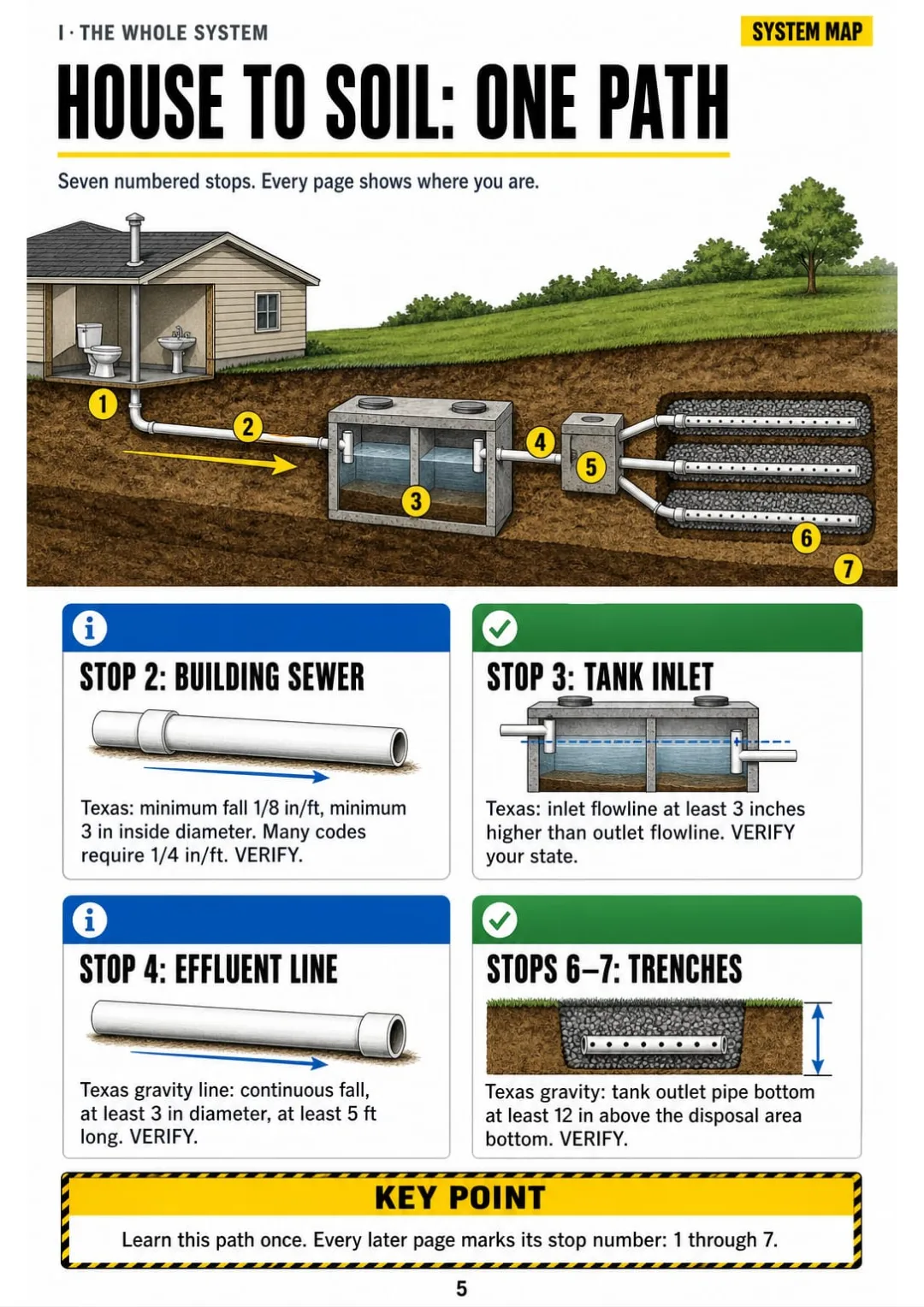
7 stops, one drawing: building drain → sewer → tank → effluent line → D-box → trenches → soil
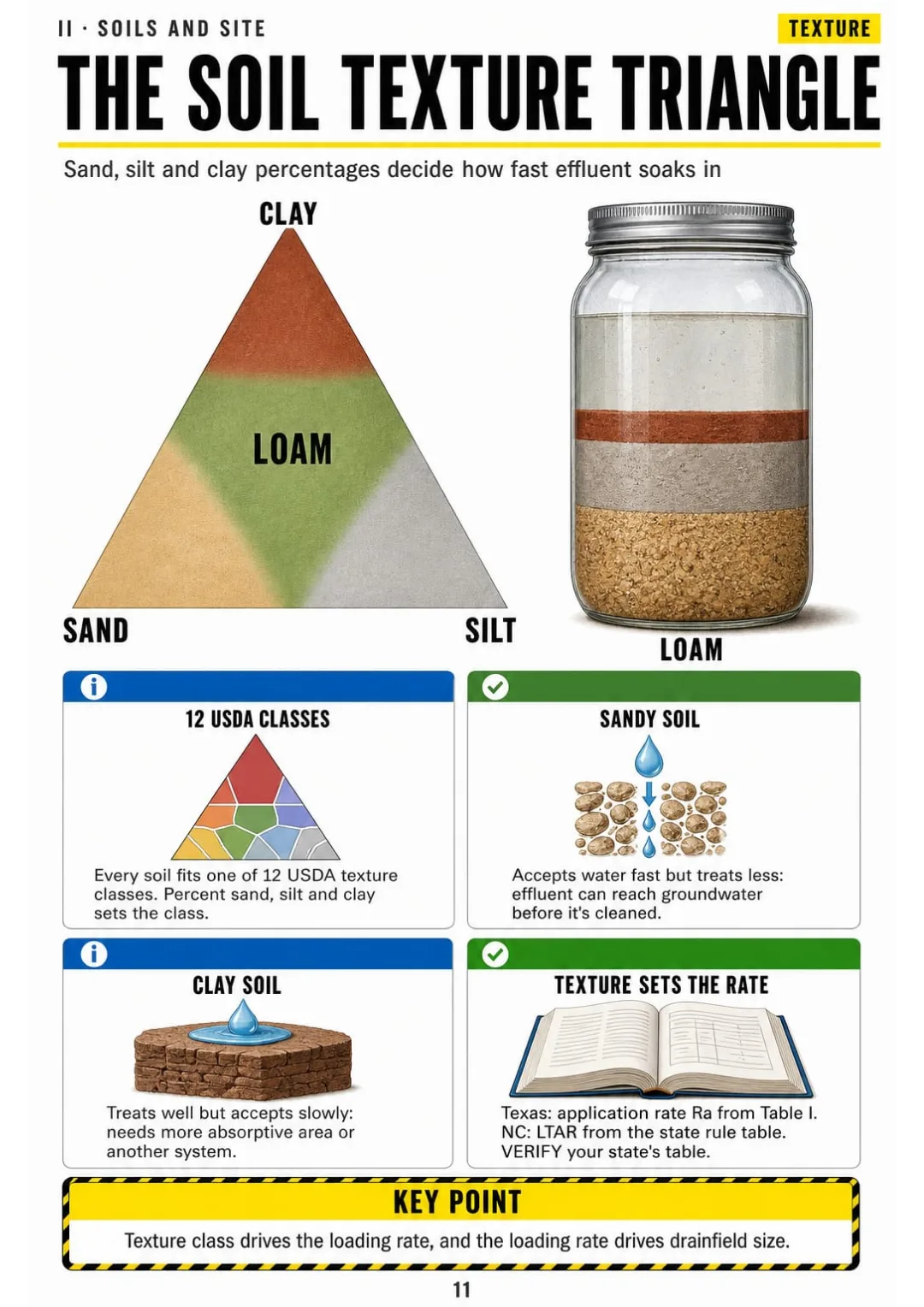
12 texture classes: sand accepts fast and treats less, clay treats well and accepts slowly
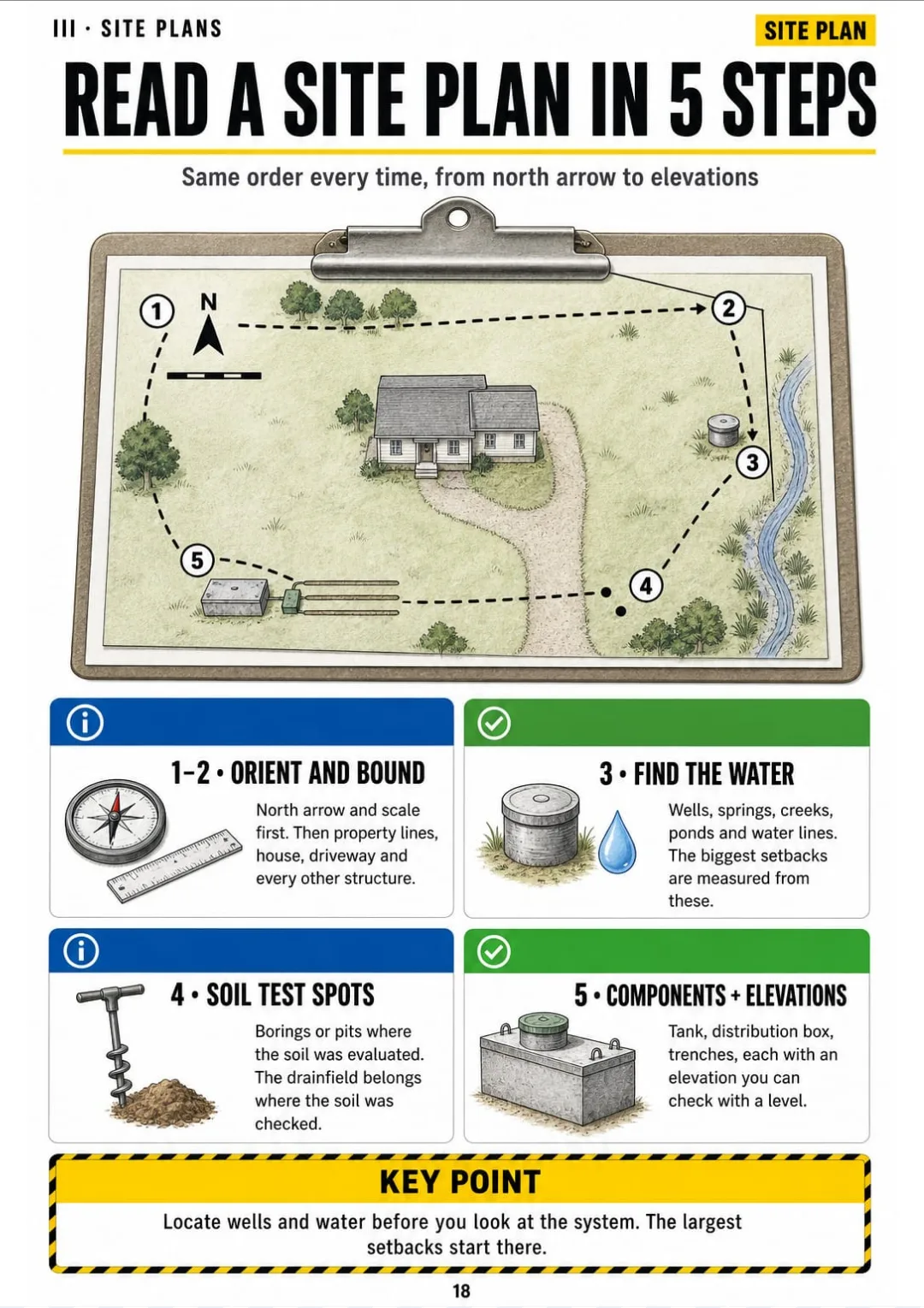
North arrow → lines → water → soil tests → components with elevations
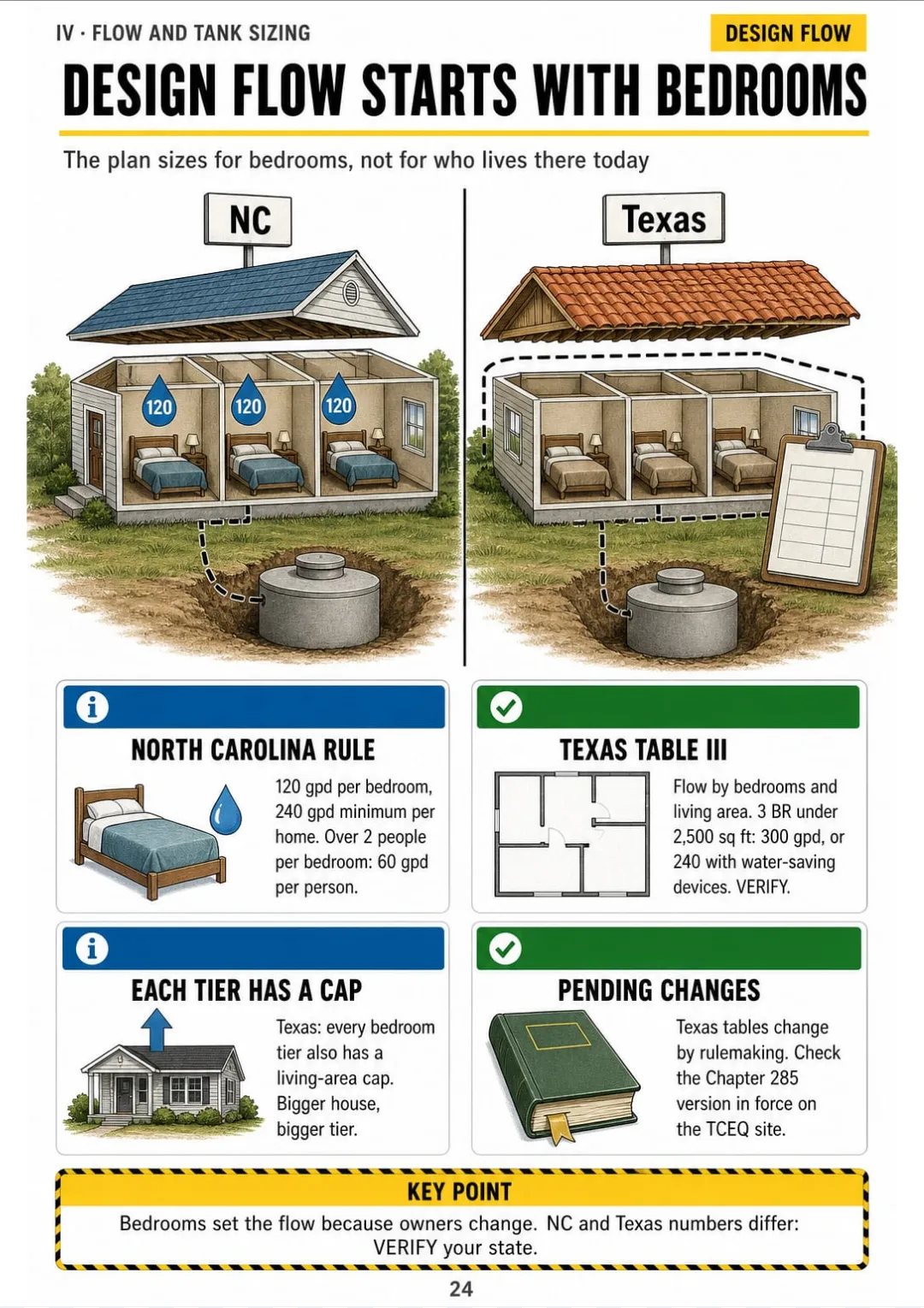
NC: 120 gpd per bedroom · TX: bedroom and square-foot table (VERIFY)
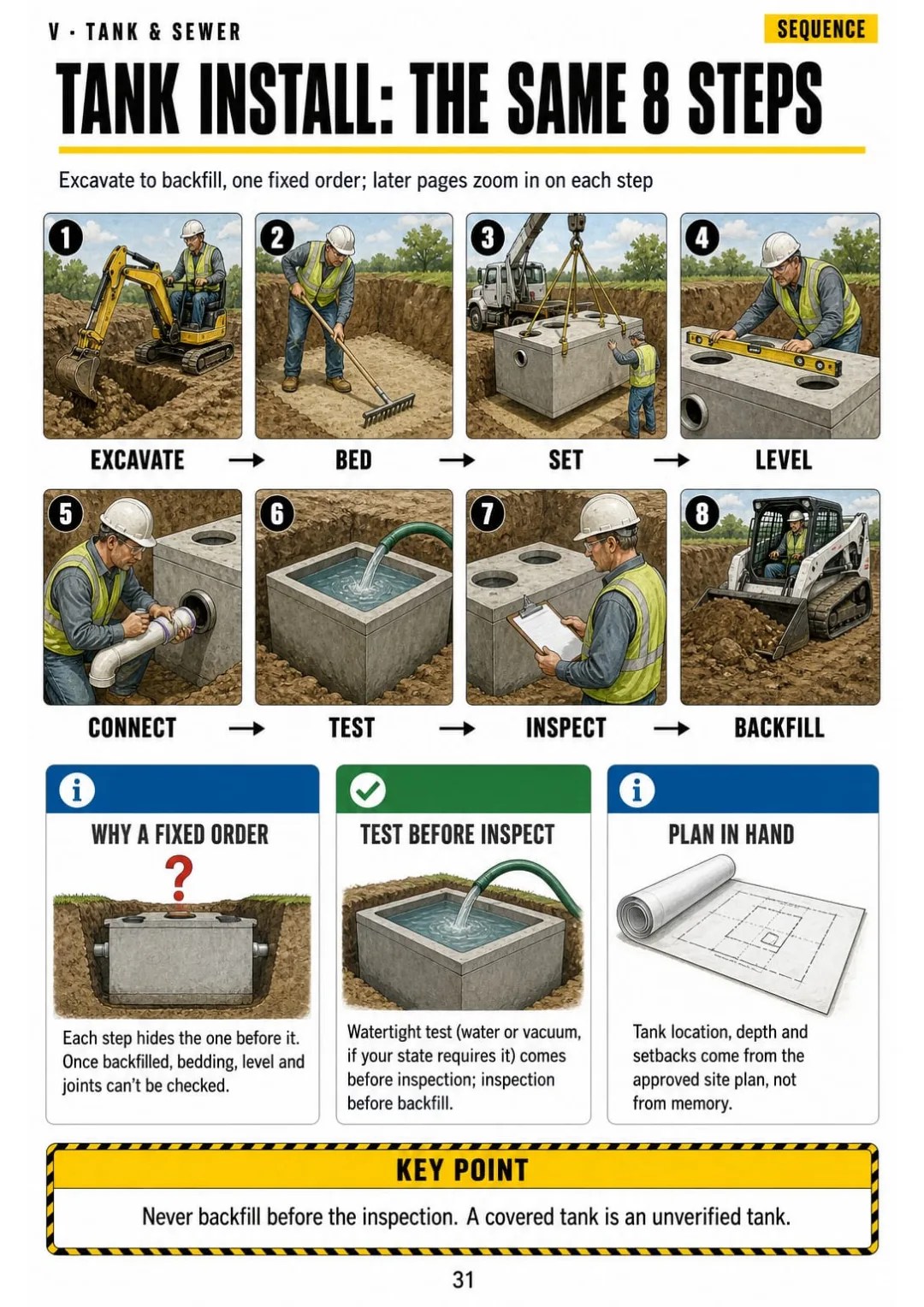
Excavate → bed → set → level → connect → test → inspect → backfill
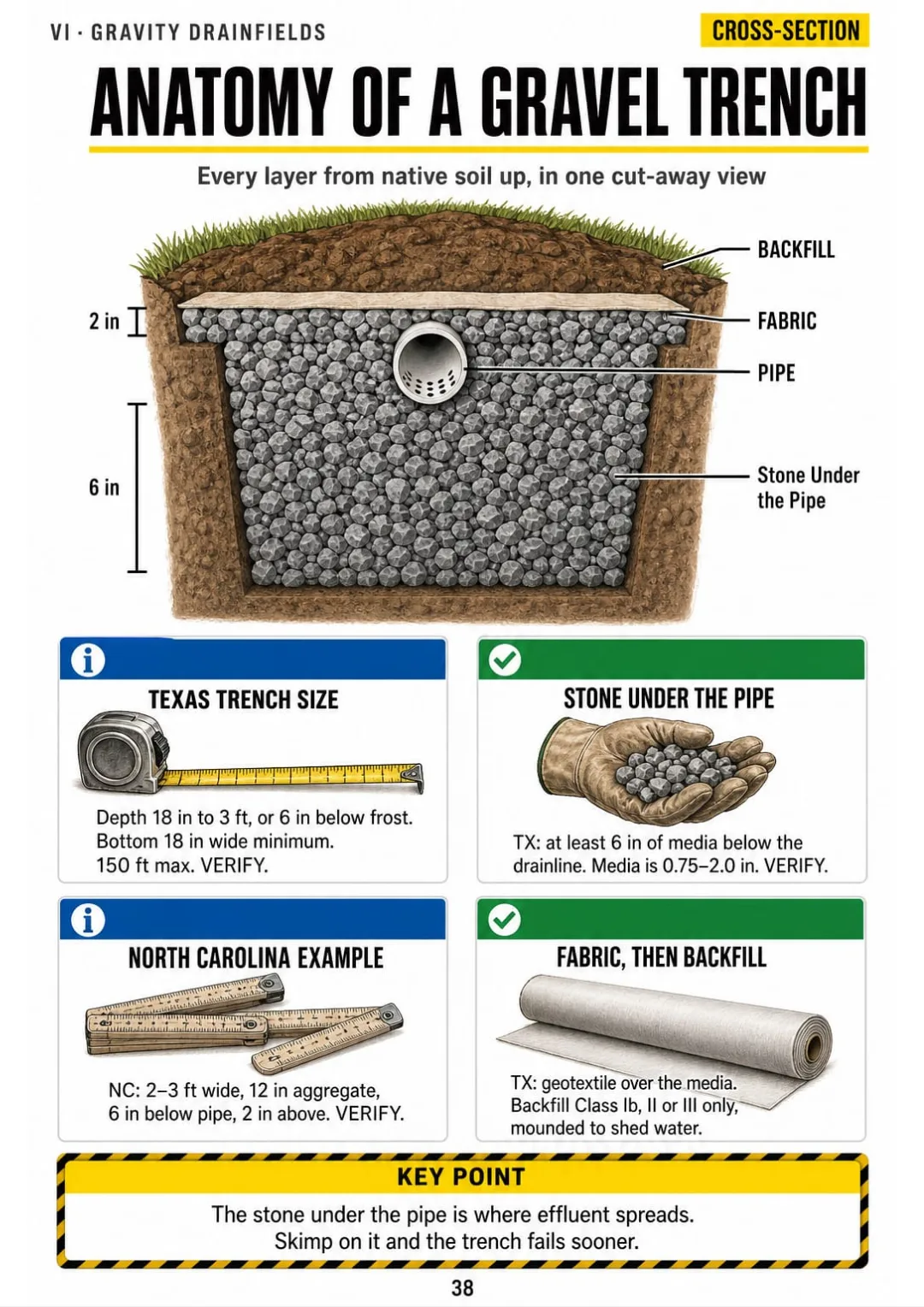
Gravel trench cut-away: 6 in of stone under the pipe, fabric on top (TX/NC, VERIFY)
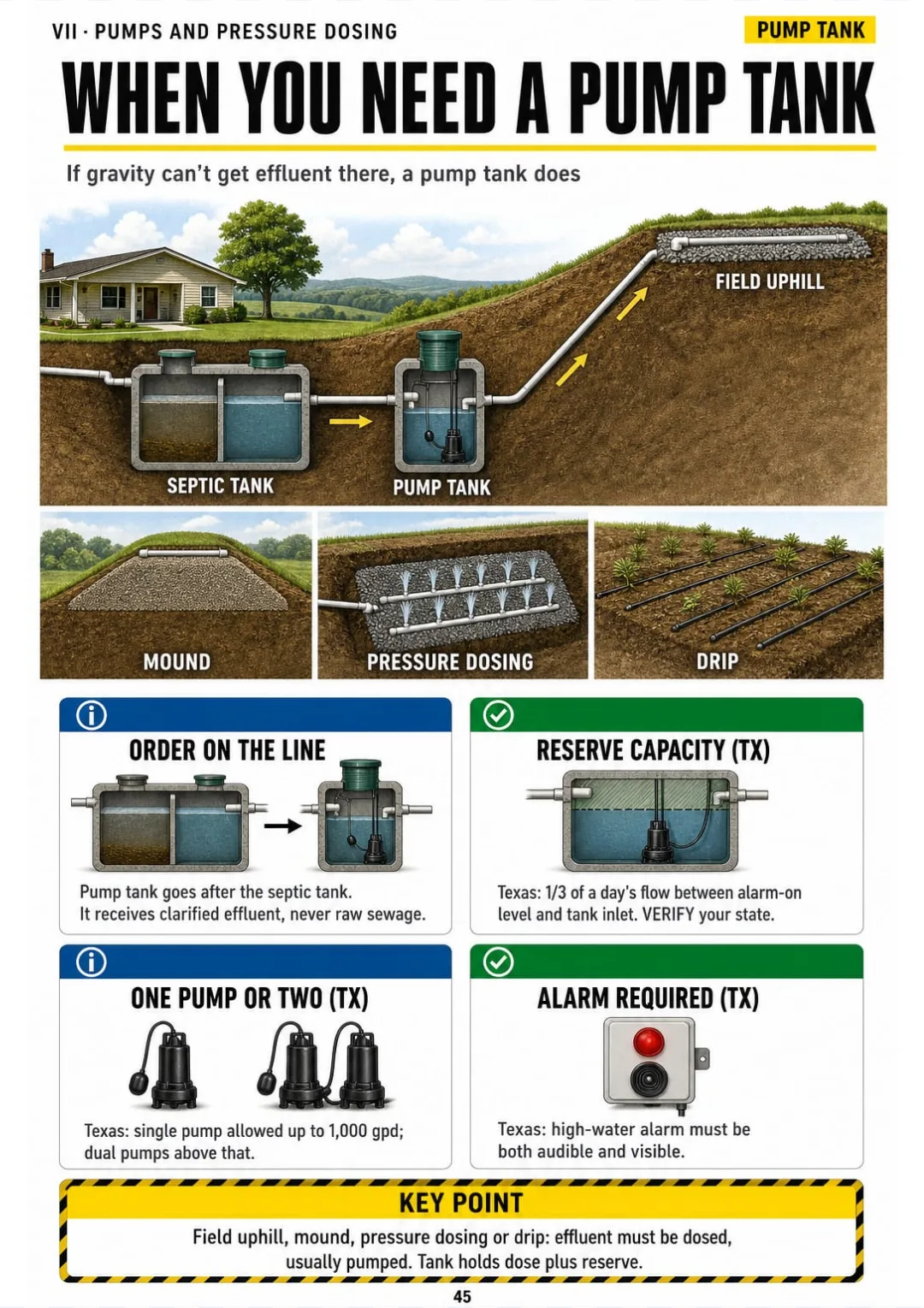
Texas: reserve = 1/3 day's flow above alarm; one pump up to 1,000 gpd (VERIFY)
Texas spray: 40 psi max, purple pipe, midnight–5 a.m. near the line

Swipe to see more →

These are real pages from the book. The table of contents is the full one: 9 parts and 60 topics.

The Problem Isn't You. It's How It Was Explained to You.

You're at the kitchen table with a practice site plan: a lot, a house, a well, two soil borings and a few elevations. The question asks where the drainfield can go, and you don't know where to start.

On site you'd figure it out by walking the lot. In the state manual it's pages of paragraphs on property lines, surface water and benchmarks, with no order to read them in.

North arrow → lines → water → soil tests → components with elevations

In the book, that same plan is one drawing with five numbered steps: north arrow, property lines, water, soil tests, then every component with its elevation. You follow the numbers and the plan makes sense.

Soil texture, design flow by bedroom, the tank install in eight steps, the gravel trench cut-away and the mound layer by layer each get their own page too.

You read the plan in the same order every time, on the exam and on the next job, without going back to the manual.

COMPARE FOR YOURSELF

Same Topic, Two Ways to Study It

THIS
  • The manual: line after line of text
  • Soil textures described only in words
  • Loam or clay loam? You still can't place it
Soil texture refers to the relative proportions of sand, silt and clay particles in the fine-earth fraction, defined as material passing a 2-millimeter sieve. Using the USDA textural triangle, the percentage of each separate is plotted along the three axes to determine one of twelve textural classes. Coarse-textured soils exhibit higher hydraulic conductivity and lower treatment efficiency, whereas fine-textured soils provide greater treatment capacity but reduced acceptance rates, which must be evaluated in conjunction with soil structure when assigning a long-term acceptance rate.
FOR THIS
  • The texture triangle in one drawing
  • The 12 classes in one box
  • Plot the sand and clay %, read the class
12 texture classes: sand accepts fast and treats less, clay treats well and accepts slowly
CONTENTS

Take a Look at the 9 Parts and 60 Topics

Nine parts: the whole system as one path; soils and the site; site plans and setbacks; flow and tank sizing; installing the tank; gravity drainfields; pumps and pressure dosing; mounds and advanced systems; and exam and inspection day. 64 pages, all illustrated.

IThe Whole System as One Path · pp. 5-10
  1. House to Soil: The Path Every Page Hangs On
  2. What the Soil Actually Does
  3. Inside a Septic Tank: Three Layers
  4. Conventional vs. Advanced: Which System, When
  5. Who Does What: Designer, Installer, Inspector
  6. Words on the Exam: The Installer's Glossary
IISoils and the Site · pp. 11-17
  1. The Soil Texture Triangle in One Look
  2. Feel It: The Ribbon Test
  3. Soil Structure and Why It Matters
  4. Mottles and Redox Features: Reading the Water Table
  5. Limiting Layers and Vertical Separation
  6. Perc Test vs. Soil Morphology
  7. Protecting the Site Before You Dig
IIISite Plans and Setbacks · pp. 18-23
  1. How to Read a Site Plan in 5 Steps
  2. Setback Table, Drawn on the Lot
  3. Tank Setbacks vs. Drainfield Setbacks
  4. Benchmarks and Elevations
  5. Slope and Fall: The Math on the Plan
  6. Replacement Area and Easements
IVFlow and Tank Sizing · pp. 24-30
  1. Design Flow: Why It Starts With Bedrooms
  2. Worked Example: 3-Bedroom Design Flow
  3. Minimum Tank Size
  4. Worked Example: Sizing the Tank
  5. Two Compartments, Baffles and Effluent Filters
  6. Commercial and Non-Residential Flow
  7. Sizing the Drainfield From Loading Rate
VInstalling the Tank and Building Sewer · pp. 31-37
  1. Tank Install in the Same Order Every Time
  2. Excavation and Trench Safety
  3. Bedding and Setting the Tank
  4. Inlet Higher Than Outlet
  5. Building Sewer: Pipe, Slope and Cleanouts
  6. Watertightness Testing
  7. Risers, Lids and Backfill
VIGravity Drainfields · pp. 38-44
  1. Anatomy of a Gravel Trench
  2. Holes Down: Setting Perforated Pipe
  3. Level Trench Bottoms on Contour
  4. The Distribution Box
  5. Serial vs. Parallel Distribution
  6. Gravelless and Chamber Systems
  7. Trench Spacing and Final Cover
VIIPumps and Pressure Dosing · pp. 45-51
  1. When You Need a Pump Tank
  2. Float Settings: Off, On, Alarm
  3. Dose Volume and Drawdown
  4. Reading a Pump Curve
  5. Pressure Distribution Laterals
  6. The Squirt Test
  7. Electrical and Control Panel Basics
VIIIMounds, ATUs, Drip and Advanced Systems · pp. 52-58
  1. The Mound, Layer by Layer
  2. Building a Mound in Order
  3. Sand Filters
  4. Aerobic Treatment Units (ATUs)
  5. Disinfection and Spray Distribution
  6. Drip Distribution
  7. Repairs, Abandonment and Failing Systems
IXExam and Inspection Day · pp. 59-64
  1. Your State's Numbers: Fill-In Page
  2. The Math You'll Use, on One Page
  3. Exam-Day Strategy for Field Pros
  4. Before the Inspector Shows Up
  5. Ten Mistakes That Fail Inspections
  6. Safety Checklist Around Tanks

One Page, One Topic, All Clear

Think of it this way:

The inspector is standing at the open trench and asks how much stone goes under the pipe. You've laid that pipe a hundred times. Now you need the number and where it comes from.

You open the gravel trench page and see the cut-away: six inches of stone under the pipe, fabric on top, and the code value marked to check against your state's current rules.

Excavate → bed → set → level → connect → test → inspect → backfill

Same with the soil texture triangle, design flow by bedroom, float settings, the distribution box and the mound: each one on its own page.

Septic Installer Illustrated is 64 illustrated pages in 9 parts, one topic per page, ending with a fill-in page for your state's numbers, the exam math on one page and an inspection-day checklist.

What you see drawn, you don't have to memorize.

What's Inside Septic Installer Illustrated:

Ipp. 5-10

The Whole System as One Path

The path from the building drain to the soil, what the soil does, the three layers in a tank, conventional vs. advanced, who does what and the exam glossary.

IIpp. 11-17

Soils and the Site

The texture triangle, the ribbon test, soil structure, mottles and the water table, limiting layers, perc test vs. morphology and protecting the site.

IIIpp. 18-23

Site Plans and Setbacks

Read any site plan in 5 steps and place every setback on the lot: tank vs. drainfield, benchmarks, slope and fall, and the replacement area.

IVpp. 24-30

Flow and Tank Sizing

Design flow from bedrooms, worked examples for flow and tank size, compartments, baffles and filters, commercial flow and drainfield sizing from loading rate.

Vpp. 31-37

Installing the Tank and Building Sewer

The tank install in the same order, trench safety, bedding and setting, inlet higher than outlet, building sewer, watertightness testing, risers and backfill.

VIpp. 38-44

Gravity Drainfields

The gravel trench cut-away, holes down, level bottoms on contour, the D-box, serial vs. parallel, chambers, trench spacing and final cover.

VIIpp. 45-51

Pumps and Pressure Dosing

When you need a pump tank, float settings, dose volume, reading a pump curve, pressure laterals, the squirt test and control panel basics.

VIIIpp. 52-58

Mounds, ATUs, Drip and Advanced Systems

The mound layer by layer and built in order, sand filters, ATUs, disinfection and spray, drip, repairs and abandoning failing systems.

IXpp. 59-64

Exam and Inspection Day

A fill-in page for your state's numbers, the math on one page, exam-day strategy, the pre-inspection check, common inspection mistakes and tank safety.

At the end of the book: A fill-in page for your state's numbers, the exam math on one page and an inspection-day checklist.

Plus: 2 Free Books

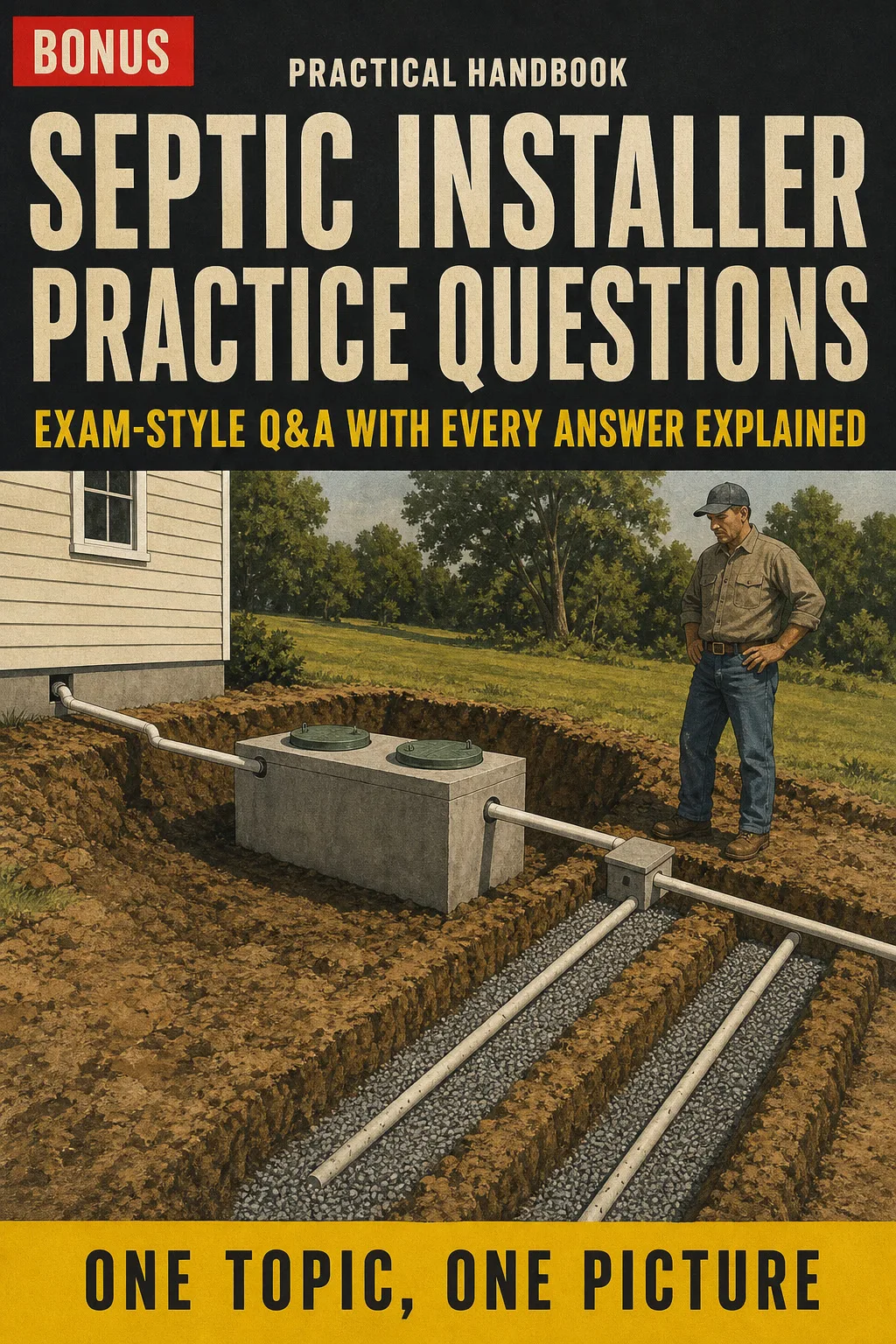
Septic Installer Practice Questions: Exam-Style Q&A with Every Answer Explained

BONUS 1: «Septic Installer Practice Questions: Exam-Style Q&A with Every Answer Explained»

Value on its own: US$ 17.90

Test yourself on soils, setbacks, tank sizing and dosing, and see why each answer is right, so you find your weak spots before exam day.

The 15 Most Common Septic Install Mistakes: Before & After, Drawn

BONUS 2: «The 15 Most Common Septic Install Mistakes: Before & After, Drawn»

Value on its own: US$ 14.90

See the wrong way and the right way side by side, from an unlevel tank to a crushed lateral, so you don't repeat them on site or on the test.

Septic Installer Illustrated with 2 Free Books

  • Septic Installer Illustrated: 64 illustrated pagesUS$ 63
  • BONUS 1: Septic Installer Practice Questions: Exam-Style Q&A with Every Answer ExplainedUS$ 17.90
  • BONUS 2: The 15 Most Common Septic Install Mistakes: Before & After, DrawnUS$ 14.90
  • High-resolution PDF to printIncluded
Total value US$ 95.80
YOUR PRICE:
US$ 27
You save US$ 68.80
YES, I WANT SEPTIC INSTALLER ILLUSTRATED FOR US$ 27

📄 This is a digital PDF book sent to your email: nothing is printed or shipped.

Secure purchaseEncrypted payment30-day guarantee

PDF by email: We email you Septic Installer Illustrated as a PDF, together with the two free books. It's a single payment: no installments, no extra charges.

Who This Book Is For

You're studying for your installer license

You're studying for your installer license

The whole system as one path, so every table in the state manual has a place to hang on.

Your exam date is set

Your exam date is set

Setbacks, sizing math and mound numbers, each on one page, to review in the same order until the morning of the test.

You already install systems

You already install systems

The why behind each number, ready to explain at the open trench, and a book you can print and keep in the truck.

Everything You Get Today

US$ 95.80US$ 27
YES, I WANT SEPTIC INSTALLER ILLUSTRATED FOR US$ 27

📄 This is a digital PDF book sent to your email: nothing is printed or shipped.

30DAYS
GUARANTEE

30-Day Guarantee

Try Septic Installer Illustrated for 30 days, bonus books included.

We refund everything if the file won't open, if the book isn't what you see here, if you were charged twice or if the email doesn't arrive. Just email us.

You pay once. No subscriptions.

Frequently Asked Questions

Is this for me if I've installed systems for years but haven't taken a written test in decades?

Yes. It doesn't teach you to dig. It puts the rules, tables and math you already deal with on site into drawings, one topic per page, in the order you work.

Does it work for my state's exam?

It covers what every state tests: soils, site plans and setbacks, design flow, tank sizing, drainfields, pumps and mounds. The worked numbers come from Texas 30 TAC Chapter 285, North Carolina 15A NCAC 18E and California's OWTS Policy, plus the U.S. EPA Onsite Wastewater Treatment Systems Manual, and each page says which state a number is from. If you test in another state, every code value is marked VERIFY and there's a page to fill in your own state's setbacks and sizing numbers from your official manual.

Is this official material?

No. It's an independent study guide. It isn't published or endorsed by any state, county or federal agency.

Does it replace my state's required course or training?

No. It doesn't replace any required course, your state's current rules or the official exam manual, and it doesn't give you a certificate, a license or continuing-education hours. It makes the rules easier to read and review.

Are the practice questions the ones on the exam?

No. The practice questions are written for this book to help you review. They are not official questions from any exam.

When and how do I get it?

The book and the 2 bonus books come as a PDF by email, to the address you enter at checkout.

Is this a subscription?

No. It's a one-time payment, with no subscription and nothing to renew. You get the book and the 2 bonus books as a PDF by email, and they're yours to keep and print.

Can I have it on paper?

Yes. The PDF is printable, so you can print it at home or at a print shop and keep it in the truck.

How does the refund work?

You have 30 days. We refund everything if the file won't open, if the book isn't what you see on this page, if you were charged twice or if the email doesn't arrive: just email us.

Before You Close This Page

No more rereading that doesn't stick.

You see the site plan drawn out, and it clicks.

You walk into the exam knowing where everything is.

Drawings make studying faster.

The book is right below.

One-time payment: US$ 27 · Guarantee: 30 days · PDF by email

YES, I WANT SEPTIC INSTALLER ILLUSTRATED FOR US$ 27

📄 This is a digital PDF book sent to your email: nothing is printed or shipped.